

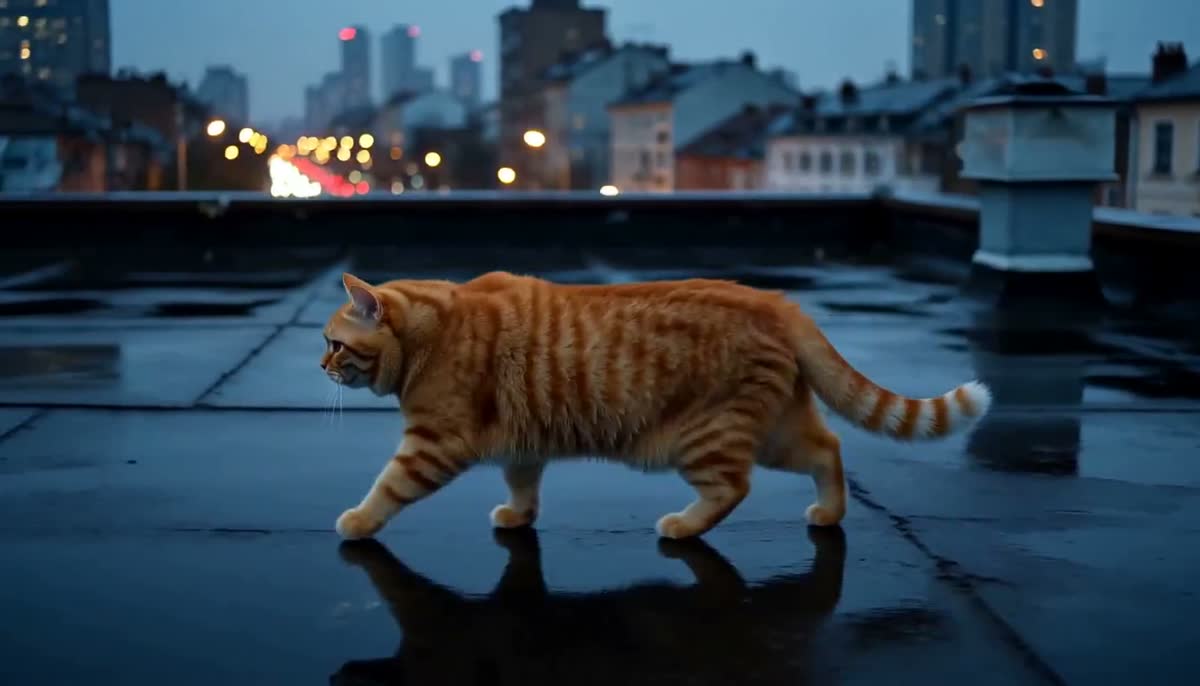
Output of the text-to-video example below: 768P, 5 seconds, 16:9
Create a token
In Token management, add a token with these settings:
You don’t need a MiniMax account or a dedicated video group.
Pricing
MiniMax H3 is billed by video length. Prices from October 24, 2026:
Official prices are from MiniMax pay-as-you-go pricing (MiniMax-H3, checked October 24, 2026). Landscape, portrait, and square videos cost the same; only resolution and seconds matter.
How the billed seconds are counted:
- Output: the
durationyou request. Clips usually run 0.1–0.5 seconds longer than requested at no extra cost. - Reference video: its length, rounded up to the next whole second; a 5.8-second clip counts as 6 seconds.
- Reference images: images beyond the first 5 in one task are charged individually, and first-frame and last-frame images count toward the total.
- 768P, 5-second text-to-video: 5 × $0.05 = $0.25
- 2K, 10-second text-to-video: 10 × $0.08 = $0.80
- 768P, 4 seconds with a 6-second reference video: (4 + 6) × $0.05 = $0.50
task_id. The call logs show the exact charge for every task.
How it works
1
Create a task
Send
POST /hailuo/v2/video_generation with a JSON body containing:model:MiniMax-H3content: one text item plus optional image, video, or audio inputsresolution,duration, andratio
task_id from the response.2
Poll the task
Call
GET /hailuo/v2/query/video_generation/{task_id} every 10 seconds and read task.status. A 4–5 second 768P video usually finishes in about a minute; 2K and reference-video tasks take longer. Set an overall client timeout of 30 minutes.3
Download the video
When
task.status is succeeded, download the MP4 from task.content.url. The link stays available for 7 days and doesn’t need an Authorization header.Set up
The cURL examples usejq to read fields from responses (install it with brew install jq on macOS). Set your key and base URL first:
Generate a video from text
ratio; adaptive isn’t accepted without an image.
Animate from a first frame or first and last frames
Usefirst_frame to set the opening shot, and add last_frame to set the closing shot as well. With ratio set to adaptive, the output follows the first frame’s aspect ratio:
data:image/jpeg;base64,.... For a first frame only, drop the last_frame item.
Generate from reference images, video, and audio
References let you put a specific character or object in the scene, reuse the motion and camera work of a clip, or follow the rhythm of an audio track. Refer to them in the prompt by type and order: the first reference image is<Picture 1>, the first reference video is <Video 1>, and the first reference audio is <Audio 1>.
- Mix reference images, videos, and audio freely, but audio can’t be the only reference; add at least one reference image or video.
- First and last frames can’t be used in the same request as references.
- Video and audio inputs must be public HTTPS links the service can download directly.
- Reference video is billed per second; see Pricing.
Poll and download
Get the task
task.status is succeeded or failed. A successful response:
usage holds the billed seconds for the task: input_seconds is reference video, output_seconds is the generated video.
Download the video
Minimal Python client
The script uses only the Python standard library. SetLAOZHANG_API_KEY before running it. It polls every 10 seconds with a 30-minute overall timeout and saves the result as h3-output.mp4.
API reference
Request basics
Request body
adaptive follows the image’s aspect ratio and can’t be used for text-only or audio-only requests. At 16:9, 768P output is 1344×768 and 2K output is 2560×1440.
content[] inputs
With a single image you can omit
role and it’s treated as the first frame. With two or more images, set role on each.
Task status
At busy times a task can stay
queued for a while and starts automatically in submission order. A task that hasn’t started after 30 minutes moves to failed and is refunded.
Errors
Some validation messages are returned in Chinese, as shown above. In production, store the
task_id from the create response and the final task details so you can reconcile charges or contact support (hi@laozhang.ai).
FAQ
How much does a 5-second video cost?
$0.25 at 768P and $0.40 at 2K. Cost scales linearly with length, so 15 seconds at 768P is $0.75. Reference video adds its seconds at the same rate, and each reference image beyond the first five adds $0.03; see Pricing.Should I use 768P or 2K?
Iterate on the prompt and composition at 768P with 4–5 second clips, then render the final version at 2K or a longer duration. 2K costs $0.03 more per second and takes longer to generate, so it’s best kept for footage meant for large screens or further editing.Can I call MiniMax H3 through the OpenAI-style /v1/videos endpoint?
No. First and last frames, multiple reference images, reference video, and reference audio all depend on the content[] structure, so LaoZhang API exposes MiniMax H3 only on the native /hailuo/v2 endpoints. Requests to /v1/videos or /v1/video/generations are rejected without charge.
Do the videos have sound? Can I turn it off?
Every video comes with a stereo soundtrack whose music and effects follow the prompt and any reference audio. There’s no parameter to disable it; strip the audio track after download if you don’t need it.Can I resubmit after a timeout or failure?
Check the task first. A client-side timeout doesn’t mean the task failed, so keep polling the sametask_id; resubmitting creates a new task and bills it again. Only recreate the request after task.status is failed, and a failed task has already been refunded.